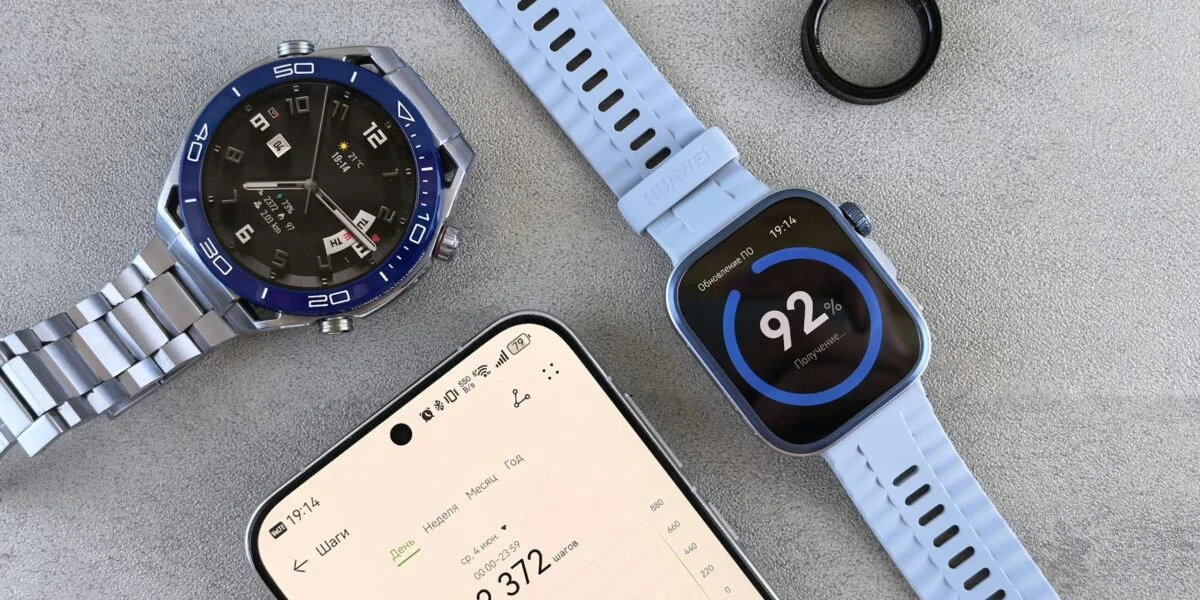
The Oura Ring 4, Galaxy Ring, and Apple Watch each track your health differently. Here’s what each one actually does well — and which one fits your life.
Smart rings are one of the fastest-growing product categories in health tech. The global smart ring market is projected to reach $3.7 billion by 2030, up from under $1 billion in 2023. That growth is being driven by one specific insight: a lot of people want health data but don’t want to wear a watch, either because they don’t like the look, find it uncomfortable to sleep in, or already wear a watch they have no intention of replacing.
The question of smart ring versus smartwatch is not really about which technology is better. It is about which form factor fits your actual life, and which data you will realistically act on. Both answers vary considerably from person to person — which is why most comparison articles that declare a definitive winner get it wrong.
Here is a honest breakdown of what each actually does.
Quick answer
Get a smart ring if: you want sleep tracking and recovery data without wearing a watch to bed, you don’t need notifications on your wrist, or you already have a watch you love. Get a smartwatch if: you want notifications, GPS, on-wrist payments, and health tracking in one device. Both have value — but most people don’t need both.
The Oura Ring 4 — What It Actually Does Well
The Oura Ring 4 is the market leader in smart rings and the device that essentially created mainstream consumer interest in the category. At $349 plus a $5.99/month membership, it is not cheap — but it is the most thoroughly validated health tracking ring available.
The ring’s strongest capability is sleep tracking. It uses 18 optical channels and a temperature sensor to measure sleep stages, HRV, resting heart rate, blood oxygen, and body temperature throughout the night. The Sleep Score and Readiness Score it produces in the morning synthesize this data into actionable numbers — a Readiness Score of 85 means push hard today, a score of 62 means take it easy.
Independent testing has found Oura’s sleep staging accuracy compares favorably to clinical polysomnography — the gold-standard sleep study. For sleep quality specifically, no consumer wearable does it better. The ring format is why: unlike a watch, most people leave it on all night without discomfort, which produces better data than a watch you take off because the band feels tight.
The Gen 4 improvements over Gen 3 are meaningful: fully titanium build, recessed sensors (no more bumps on the inside of the ring), 8-day battery life, and a wider size range. It is also significantly more comfortable than earlier versions, which matters for a device you wear 24/7.
The honest limitation: The Oura Ring 4 is excellent at telling you things. It is not excellent at doing things. No GPS. No notifications. No payments. No display. If you want to track a run, you need your phone. If you want to see a message, you look at your phone. It is a data collection device, not a wrist computer — and that distinction determines whether it is the right tool for you.
$349 + $5.99/month — Check current price on Amazon →
Samsung Galaxy Ring — Best for Android Users
Samsung’s Galaxy Ring is the Oura’s most direct competitor and the better choice for Android users already in the Samsung ecosystem. At $399 with no subscription fee, the total cost over two years is lower than the Oura ($349 + $144 in membership fees = $493 versus $399 flat).
The Galaxy Ring integrates tightly with Samsung Health, Galaxy Watch, and Galaxy phones — data flows between devices automatically and the Galaxy AI health coaching features work across the ecosystem. For someone with a Galaxy phone and Galaxy Watch, the ring adds sleep and recovery data without duplicating the watch’s other functions.
Sleep tracking accuracy is generally rated slightly below Oura’s in independent testing, but the gap is narrowing. The ring’s battery life is 7 days — one day less than the Oura but still enough that most people charge it weekly without thinking about it.
~$399, no subscription — Check current price on Amazon →
Apple Watch Series 10 — Best Smartwatch if You Have an iPhone
The Apple Watch Series 10 is thinner, lighter, and faster than any previous Apple Watch. For iPhone users who want health tracking plus notifications plus GPS plus Apple Pay in one device, nothing else comes close.
Health tracking includes ECG, blood oxygen, skin temperature, cycle tracking, crash detection, and fall detection. Sleep tracking has improved significantly in watchOS 11 — it now tracks sleep stages rather than just sleep duration. The fitness tracking is broadly considered the best in class for smartwatches, with accurate GPS, workout detection, and an enormous library of supported activities.
The watch’s limitation for sleep specifically is the charging requirement. With 18 hours of battery life, most users charge it overnight — which means wearing it to sleep requires a different approach, either charging it for an hour before bed or wearing it to sleep and charging in the morning. Both are workable but require behavior change. For people who want sleep data passively without any routine adjustment, a ring is lower friction.
From $399 — Check current price on Amazon →
The Honest Comparison
| Feature | Oura Ring 4 | Galaxy Ring | Apple Watch S10 |
|---|---|---|---|
| Sleep tracking | Best in class | Very good | Good |
| Notifications | None | None | Full |
| GPS | Phone only | Phone only | Built-in |
| Battery life | 8 days | 7 days | 18 hours |
| Subscription | $5.99/month | None | None (base) |
| Comfort for sleep | Excellent | Excellent | Requires habit change |
| Best for | Sleep + recovery focus | Android / Samsung users | All-in-one iPhone users |
Who Should Not Buy a Smart Ring
If your primary goal is fitness tracking — GPS runs, swim tracking, workout detection — a ring is the wrong tool. The form factor simply cannot do what a watch does for active exercise monitoring. A ring without GPS can track your heart rate during a run via your phone, but the experience is clunky compared to a watch with built-in GPS that handles everything independently.
If you want one device that does everything, a smartwatch wins that comparison straightforwardly. The trade-off is that you need to charge it every night or two, which means either wearing it to sleep on a short charge cycle or missing out on sleep data. Many people accept that trade-off happily. Many others don’t.
If you want the best possible sleep and recovery data and you already have a phone that handles everything else, a ring is worth serious consideration. The data quality at night, when you are actually lying still and the ring has consistent contact, is genuinely better than most wrist-worn devices.
ClearlyBold.com may earn a commission from purchases made through our links at no extra cost to you. All recommendations are editorially independent.