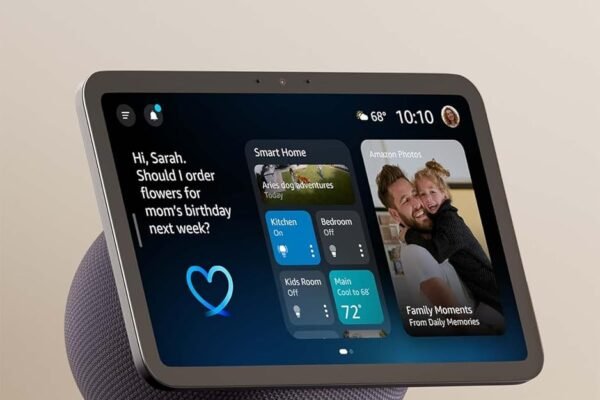
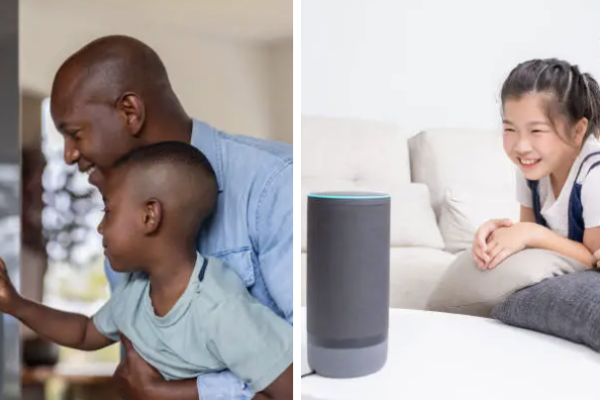
Google Assistant answers questions correctly 92% of the time. Alexa manages 75%. Siri sits at 78%. But none of that tells you which one actually belongs in your home. Here’s the real breakdown.
Here is a number worth sitting with: Google Assistant answers questions correctly 92% of the time. Alexa manages 75%. Siri sits at 78%. That gap — 17 percentage points between the smartest and the least smart assistant — is roughly the difference between a colleague who usually gets things right and one who gets them right three quarters of the time.
Now here is the thing most smart home articles don’t tell you: the assistant with the best accuracy score is not necessarily the one that belongs on your kitchen counter. And the one you talk to on your phone is almost certainly more capable than the one in the speaker you bought for $30. Understanding why — and what to do about it — is what this article is actually about.
Why Your Phone Assistant and Your Speaker Assistant Are Not the Same Thing
Your iPhone’s Siri and your HomePod’s Siri share a name and a voice. They do not share the same capabilities. The same is true of Google Assistant on your Pixel phone versus Google Assistant on a Nest Mini, and Alexa on your phone’s app versus Alexa on an Echo Dot.
The phone versions have access to everything on your device — your calendar, your contacts, your messages, your photos, your location history. They can read your screen, understand context from your apps, and take actions inside applications. The speaker versions are cloud-dependent, have no access to your personal data unless you explicitly connect services, and are limited to what their respective ecosystems have been programmed to handle.
This is the gap. Your phone assistant knows you. Your counter assistant knows commands.
Apple made this explicit with the 2026 Apple Intelligence update — Siri now understands context better, can execute actions within apps, and integrates deeply with the HomeKit ecosystem, with on-device processing and minimal data collection. But that version of Siri lives primarily on your iPhone and iPad. The HomePod version is catching up, but it is not there yet.
What Each Assistant Actually Does Well
Google Assistant — The One That Answers Your Questions
If you ask your voice assistant a question and you want a correct answer, Google Assistant is the one to use. Google Assistant understands context, follow-up questions, and conversational speech patterns better than competitors — you can speak more naturally without learning specific command structures. The 92% accuracy figure comes from independent testing across a wide range of question types. That lead over Alexa and Siri is consistent across multiple studies.
The tradeoff is privacy. Google’s advertising-based business model involves extensive data collection, though users can control privacy settings and data retention. If you are the kind of person who has already accepted Google’s presence in your digital life — Gmail, Maps, Search, YouTube — adding Google Assistant to your home is a natural extension of that relationship. If you are not, it is a more considered choice.
Where Google Assistant falls short: device compatibility. Alexa’s ecosystem reach is one of the widest, which explains frequent comparisons between Google Home and Alexa when choosing hardware. Google works with most popular smart home brands, but the long tail of obscure devices that Alexa supports does not exist in Google’s ecosystem.
Alexa — The One That Controls Your Home
Alexa does not win the intelligence test. It wins the integration test. There are presently over 140,000 smart devices that support Alexa — more than any other platform by a significant margin. If a device supports voice control at all, it almost certainly supports Alexa. If it only supports one assistant, it is usually Alexa.
The 2026 Alexa Plus upgrade changed the intelligence picture somewhat. With the Alexa Plus upgrade, Alexa became more conversational and can handle complex multi-step requests. The accuracy gap between Alexa and Google Assistant has narrowed. But for everyday questions — the kind you actually ask a voice assistant daily — Google still leads.
Where Alexa genuinely excels: routines and automation. Alexa’s automation system handles advanced routine capabilities with scheduling, device triggers, and conditional logic that leads the category. If you want to build complex home automations — “when I leave, turn off everything except the bedroom lamp, lower the thermostat, and arm the cameras” — Alexa’s routine builder is the most flexible of the three platforms.
The honest downside: Alexa often promotes Amazon services and products over competitors, though this has improved significantly over time. Ask Alexa to play a song and it will default to Amazon Music. Ask it to buy something and it defaults to Amazon. The assistant is genuinely useful and genuinely commercial in equal measure.
Siri — The One That Works Best When You Don’t Talk To It
This sounds like a criticism. It is not meant to be. Siri’s best feature in 2026 is the one least discussed in comparison articles: it does things without being asked. The iPhone’s Siri Suggestions surface the app you are about to open before you open it. It knows your routine well enough to suggest leaving for an appointment based on current traffic before you think to check. It sees your screen and understands what you are looking at.
On a HomePod, none of that applies. Siri offers a seamless experience within the Apple ecosystem — but that ecosystem is your Apple devices. The HomePod is the weakest version of Siri available, because it is the version furthest from your personal data. Ask it a general knowledge question and it apologizes for not being able to help roughly a quarter of the time, according to Tom’s Guide testing.
Where Siri wins unconditionally: privacy. Best privacy — on-device processing, minimal data collection is the consistent finding across independent evaluations. If the idea of a microphone in your home that streams audio to a company’s servers concerns you, Siri and HomeKit are the only ecosystem designed with that concern as a priority rather than an afterthought.
The Honest Scorecard
| What You Need | Best Choice | Why |
|---|---|---|
| Accurate answers to questions | Google Assistant | 92% accuracy, best context understanding |
| Smart home device control | Alexa | 140,000+ compatible devices, best automation |
| Privacy-first setup | Siri / HomeKit | On-device processing, minimal data collection |
| iPhone household | Siri / HomeKit | Seamless integration across all Apple devices |
| Cheapest entry point | Alexa | Echo Dot starts at $30 |
| Complex automations | Alexa | Most flexible routine builder of the three |
What This Means For Your Home
The practical implication of all of this is simpler than the comparison articles make it seem. No voice assistant is perfect — each excels in a different area. Google Assistant is the smartest with the best multilingual capabilities. Siri offers top privacy and seamless Apple integration. Alexa has the widest compatibility and cheapest speakers.
Most people do not need to choose based on the accuracy percentages. They need to choose based on one question: what is this device primarily going to do in my home?
If the answer is “answer questions, play music, and tell me the weather” — Google Assistant is the best tool for that job. If the answer is “control my lights, my thermostat, my locks, and run automations when I come and go” — Alexa’s device compatibility and routine depth will serve you better than either alternative. If the answer is “I have an iPhone and I want everything to work together without thinking about it” — HomeKit with a HomePod Mini is the lowest-friction path.
The gap between your phone assistant and your counter assistant is real. But it matters less than the gap between the assistant you chose and the way you actually use it. A Google Nest Mini that does nothing but tell you it is going to rain is not smarter than an Echo Dot that runs four daily automations without you ever asking it to.
The One Thing Worth Knowing About 2026
The assistant gap is closing from a different direction than most people expected. ChatGPT, Claude, Gemini, and Perplexity are all more capable at open-ended reasoning than Alexa, Siri, or Google Assistant. The question is no longer “which voice assistant is smarter” — it is “when do these general AI tools start showing up inside my home devices?”
Alexa Plus already incorporates a more conversational AI layer. Apple Intelligence is making Siri meaningfully more capable on iPhone. Google’s Gemini is beginning to appear inside Google Assistant responses. The counter assistant of 2027 will be notably more capable than the one sitting on your shelf today. Which is either a reason to wait, or a reason to start now with the platform you are most likely to stay with. Either answer is defensible.
ClearlyBold.com may earn a commission from purchases made through our links at no extra cost to you. All recommendations are editorially independent.